Adult Social Care Report, Electronic Care Plans 22Oct, 2019
Cura Supports CQC’s State of Care Annual Report

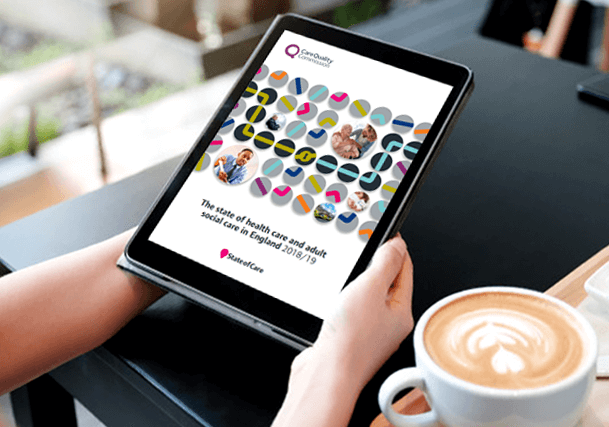
The Care Quality Commission’s (CQC) annual assessment of the state of health and adult social care in England shows how providers are working together more effectively – often using technology to help – to ensure that people get the care they need when they need it.

The state of health care and adult social care in England 2018/19

CQC is clearly supporting the use of technology and innovation to improve the delivery of quality care.  Cura shares this belief and wholeheartedly supports CQC’s leadership in encouraging care providers to use of digital systems to enhance their care services. Read the full report here: https://www.cqc.org.uk/publications/major-report/state-care

Cura’s view on CQC’s five key barriers to adoption of technology

1. A lack of funding to invest in technology

Investment in technology pays for itself in the long run.  The cost of handling paper will continue to rise.  Going digital also saves caregiver’s time (up to 2 hours per day) that can be better deployed.

2. A low level of knowledge and awareness among providers and staff – adoption of technology tends to rely on confident individuals

Technology can be daunting. A step-by-step adoption works well.  Cura’s user friendly, intuitive care management systems and a friendly helpdesk with lots of hand-holding will ease the process in every step of your digital journey.

3. Fear that technology could replace personal support

Technology will never replace the human touch! Technology makes quality care easier.  To survive in the digital age, care providers must embrace technology to improve outcomes.

4. The perception that people who use adult social care are not interested or will respond badly to technology

Lack of IT knowledge using digital care systems for adult social care may lead to wrong perceptions of its potential as a tool to transform care – life changing for both the caregivers and service users. Our customers have seen positive results of how they have delivered effective individualized care by simply using our electronic care plans.

5. Concerns about ethical or data protection implications in adopting technology that uses personal information

Cura’s Cloud servers are hosted with the industry’s most respected organisations and we are vigilant about security and constantly upgrade our systems to avoid the growing number of threats. Under no circumstances will we share any customer data held in our servers with anyone and all data control vests with the care home.

The CQC has continually urged health and care services to embrace innovative digital technologiesWe have the right tools and support to improve CQC ratings. If you do not yet use technology within your care setting. It’s time to go paperless and reap significant benefits. Find out what you’re missing, contact us on 020 3621 9111 to see the most feature rich care home software in the market today.

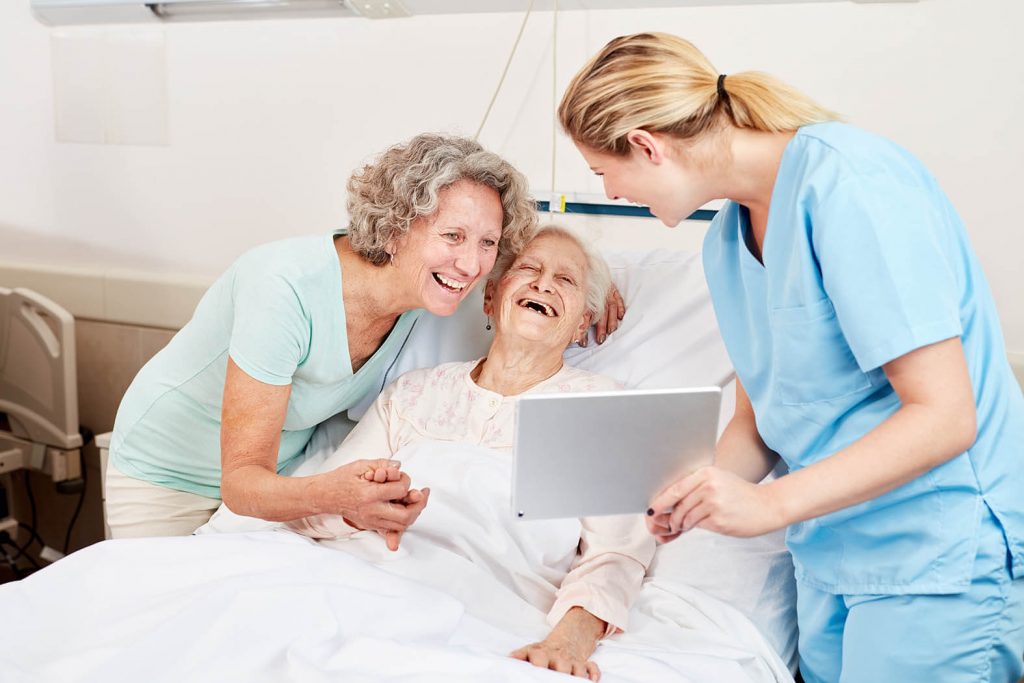
Nurse with Senior Resident, Electronic Care Plans for Care Homes 11Oct, 2019
Achieve Outstanding Care by Switching to Electronic Care Planning System

Technology in care has become increasingly important, transforming the way care is delivered. We have heard positive feedbacks from different care homes how they have improved their ratings by simply using electronic care plans, resulting in many people experiencing better and safer care.

Unlock Outstanding Care: How Electronic Care Plans for Care Homes Boost CQC Ratings

The Care Quality Commission (CQC) has continually encourage health and social care providers to embrace innovative digital technologies to improve care delivery.

Kate Terroni, chief inspector of adult social care for the CQC has highlighted in her recent blog that more and more care providers have been using electronic care plans to deliver safe, effective, person-centred care at the touch of a button. Read the full article here: https://medium.com/@CareQualityComm/kate-terronis-blog-565c01e99817

Digitally-enabled care planning can offer significant benefits to service users. We provide care providers with our comprehensive home care systems and secure tools and support to achieve and evidence your CQC compliance and delivery of best breed of care.

Here are just some benefits from using electronic care plans for care homes:

  1. More control over health, safety and well-being of service users
  2. Better visibility of care operations
  3. Reduce paperwork, resulting in more time to care
  4. Improve communication, administration cost and care outcomes
  5. Empower care teams make better decisions

Speak to our customers to fully understand the Cura Systems way of going digital. Please quote “Cura means Care” whilst booking your Cura demonstration to get your free ‘Go Green Bag’.

Home Care Systems, Electronic Care Plan 15Aug, 2019
Cura Leads the Way to Going Digital

Like it or not, technology has crept into our daily lives. And now, it has a rapidly growing role in the long term care sector and the ageing population. Tech-savvy care homes now use powerful tablets and other mobile care monitoring devices at the point of care delivery to ensure the appropriate care is delivered and on a timely basis.

Care providers have been slow to embrace technology with typical fear of technology and change. The lack of IT knowledge is just one of the reasons why care providers avoid going digital. The change required in processes and procedures is all too often overlooked or under-played. The reliance on “good-old paper” that cannot be accidentally deleted is a real factor and change management has to recognise the degree of change many older care workers have to go through before they are comfortable with an alien way of doing things.

Evidence-based Digital Home Care Systems

John Rowley, Senior Sales Manager from Cura Systems has been a long term proponent of the use of technology in the care sector and has observed “The care home industry is way behind in terms of adopting technology. We at Cura will continually bring care to the next level by working towards more innovative ways in the advancement of technology”

Cura understands the significance of such issues. Cura technology and processes are designed to make the transition as painless as possible and gain the buy-in from caregivers so that the adoption of technology is seen to benefit the caregivers and lead to durable improved performance

Given the plethora of digital home care systems now available, it has become a mind boggling exercise to weed out the offerings that are good at a specific aspect of the provision of care. Cura have taken a different approach, the system has adopted a comprehensive approach with the widest functionality in the market. Its Tablet version, designed from the ground up for caregivers is largely intuitive and requires hardly any training.  But it’s not just about adopting technology. It is about managing the transformation to a new opportunity for the care providers to improve the way care is delivered; admission process, medication management, documentation of residents’ records, and sharing of vital information in the care ecosystem.

Embracing Technology in Caregiving

In recent statements, CQC (Care Quality Commission) has also urged health and care service providers to embrace innovative digital technologies to improve care delivery. Technological innovations such as care apps and tablets that can help to take more control over care. Find out CQC’s strategic priority here: CQC-Driving improvement through technology

With the inevitable onward march of care systems and compliance with CQC’s vision 2021, care homes need to be implementing or at least preparing to go digital.

Cura is at the forefront of technology innovation and transforms caregiving. We support care homes of all types and sizes, whether that be a family run, single care home, a larger care provider, or those providing specialised care to service users with complex care needs.

Cura Systems ensure that you get the most out of our care management system and be handheld through the going digital process. Bring genuine person-centred care a step closer and give your care home a competitive advantage.

Speak to our customers to fully understand the Cura Systems way of going digital. Please quote “Cura means Care” whilst booking your Cura demonstration to get your free ‘Go Green Bag’.

Cura Systems, CQC KLOE Caring 17Jun, 2019
Putting care back into care homes

An outstanding care home must be caring, one of the CQC’s five key lines of enquiry. In the third of our new series, we look at how care home owners and key decision makers can ensure they meet the CQC’s criteria.

In the best care homes, all staff involve and treat their residents with compassion, kindness, dignity and respect. It should not need saying but these qualities must be at the centre of all care and in all residential and nursing homes.

The Care Quality Commission (CQC), the body responsible for ensuring the highest standards of care, asks five key questions when it monitors services to help focus on the things that matter to people. 

The fourth question is absolutely critical: are staff caring?

All homes set out to do the best for residents and to create a caring environment. Sometimes, in a busy environment, maintaining the highest standards all the time can be a challenge. Understanding the CQC’s line of enquiry can help to ensure that these standards are maintained or exceeded.

KLOE Caring

The CQC expects staff to treat people with kindness and compassion in their day-to-day care and support. Evidencing of care is critical. The CQC will look for evidence that people, and those close to them, feel they matter. This means that staff listen to them and talk to them appropriately, in a way they can understand. To do this, staff need to know the people they are caring for, including their preferences and personal histories. In a good home, staff show concern for people’s wellbeing in a caring and meaningful way, and respond to their needs promptly. Compassionate, respectful and empathetic behaviour is understood and promoted within the staff team.

The service should support residents to express their views and be actively involved in making decisions about their care, support and treatment as far as possible. Staff recognise when residents need and want support from their carers, advocates or representatives to help them understand and be involved in their care, treatment and support.  Staff give information to residents, their families and other carers about external bodies, community organisations and advocacy services that can provide independent support and advice, answer questions about their care, treatment and support, and, where necessary, advocate for them.  Relatives and friends should feel welcome and able to visit without being unnecessarily restricted.

Respecting and promoting people’s privacy, dignity and independence is essential, including during physical and intimate care. Staff should respond in a compassionate and timely way when residents experience physical pain, discomfort or emotional distress. Information about them should be treated confidentially in a way that complies with the Data Protection Act.

The service must make sure that young adults have choice and flexibility about their privacy and the amount of parental involvement in managing their care and support after moving into adult services.

Cura means care, and we are committed to supporting owners and managers to deliver outstanding care. We help care homes with the most demanding needs to deliver better quality outcomes by automating more daily tasks for management and caregivers than any other care home software. When it comes to caring, our care home management systems support staff with the information they need about residents and help managers foster a positive, caring environment.

Our electronic care planning record and mobile care applications support care home managers to meet and exceed CQC standards. Our comprehensive care home systems deliver real benefits to everyone connected to the home.

  • We hope you enjoyed this article. Look out for further articles here on what makes an outstanding care home as recognised by the CQC.
KLOE Effective, CQC Compliance 13May, 2019
Effective care gives care home residents and their loved ones peace of mind…and that’s official!

Delivering Effective Care: A Top CQC Priority

  • An outstanding care home must be effective, one of the CQC’s five key lines of enquiry. In the second of our new series, we look at how care home owners and key decision makers can ensure they meet the CQC’s criteria.
  • CQC’s defines effective to mean that people’s care, treatment and support achieves good outcomes, promotes a good quality of life and based on the best available evidence

Finding out what a good care home looks like helps families make choices about the care of their loved ones. It can also help them understand what they should expect from a service provider.

CQC KLOE EFFECTIVE

The Care Quality Commission (CQC) is the body responsible making sure that residential care homes meet the highest standards of care. One of the questions the CQC asks is how effective a home is. What does this mean in practice?

A critical concern is that staff must have the right knowledge, qualifications and skills to carry out their roles, enabling residents to have a good quality of life. They should always ask for a resident’s permission to give care, treatment and support in a way that is easy to understand. Family and friends should also be involved in decisions about care, where appropriate.

Staff should know about each resident’s health needs and personal preferences, and give them as much choice and control as possible. Staff should also work with health and social care professionals, such as GPs, and take the right action at the right time to maintain good health.

The CQC gives the highest priority to nutritional needs, and one crucial measure of an effective care home is that staff make sure residents get the right food and drink they need.

Residents should also expect to be asked for their likes and needs when the home is adapted or decorated. Any changes to the home should be made to help residents to be as independent as possible.

Cura means care, and we are committed to supporting owners and managers to deliver outstanding care. We help care homes with the most demanding needs to deliver better quality outcomes by automating more daily tasks for management and caregivers than any other care home software.

CQC also looks at how technology is used to make the service more effective and our suite of applications supports care staff by giving them the information they need to ensure that they meet CQC’s criteria for the effective running of their care home. Electronic records for care homes and mobile care apps support care home managers to meet and exceed CQC standards. Our intuitive home care system deliver real benefits to everyone connected to the home.

We hope you enjoyed this article. For more insights on what makes an outstanding care home as recognised by the CQC, be sure to visit the KLOE Caring blog. Stay tuned for more informative articles!

Cura Systems, KLOE Safety 17Apr, 2019
Putting safety at the centre of all decisions about the care of your loved ones

What Makes a “Safe” Care Home?

Safety is at the heart of CQC’s five key lines of enquiry. In the first of a new series we look at the importance of the first standard: SAFETY

When the time comes for a loved one to move to a care home it is only natural that the first and overriding concern will be for their safety. Entrusting a mum, dad, husband or wife to the care of strangers pushes against natural instincts to do all that we can to protect and provide for them ourselves.

Choosing the right care home is one of the biggest and most difficult decisions to be made and safety will figure very prominently in the selection of a care home. Care homes need to have appropriate tools to demonstrate to relatives of prospective service users their ability to monitor safety.

Also, recognising these concerns, the first question asked by the Care Quality Commission (CQC) is always about safety. CQC also expects care homes to be effective, caring, responsive and well-led. But its first key line of enquiry concerns safety.

CQC KLOE SAFE

‘Safe’, in this instance, means taking every possible step to ensure that residents are protected from abuse and avoidable harm. Abuse can be physical, sexual, mental or psychological, financial, neglect, institutional or discriminatory abuse.

Avoidable harm will consider everything from medicines management to safe use of facilities and equipment. CQC scrutiny is robust to ensure that all these conditions are met. CQC inspection reports give families and loved ones the information they need regarding a home’s ability to meet these conditions consistently.

Electronic care plans for care homes and mobile care monitoring can play a significant role in supporting care home managers to meet and exceed CQC standards.

Cura also recognises the critical importance of safety in care. Our comprehensive care management systems deliver real benefits to everyone connected to the home. Cura’s suite of applications supports care staff by giving them the information they need to ensure that they meet CQC’s criteria, including the safe delivery of care.

We hope you enjoyed this article. Look out for further articles here on what makes an outstanding care home as recognised by the CQC.

Care Home Easter 16Apr, 2019
Cura Means Care: 5 eggcellent ways to celebrate Easter in your care home

Celebrating Easter in a care home

Easter Sunday falls on 21stApril 2019 this year. The holiday is a well-celebrated tradition especially in Christian countries around the world. Easter is about spending time with family and a great way to visit your loved ones in a home.

Traditions associated with Easter have evolved considerably over time. You can offer a variety of activities for your residents and their families.

Here are just some of the ways to celebrate Easter in your care home:

  • Painting and dyeing Easter eggs– this is a fun activity your residents will enjoy together with their family and grandchildren. Transform eggs and let the residents give them their own personality by adding sparkly glitters, colorful dyes, paper mache, and markers.
  • Easter themed Bingo– this activity is a modified version of Bingo that uses images and a perfect activity for any Easter gathering in a care home.
  • Easter Egg treasure hunt– get the residents to hide Easter eggs then you can invite their families or children from nearby to hunt and collect the eggs for them.
  • Baking easter cupcake – your lovely residents will surely enjoy baking and decorating their own cupcakes with icing, chocolates, colorful sprinkles or edible toppers.
  • Decorate Easter hats– gather the residents and let them decorate and accessorize their own Easter hats and have a mini Easter parade with their families and your care home staff

Remember we do not need to throw a big party to celebrate the tradition but making it a fun-filled memorable experience for our residents.

Cura Systems would like to greet you all a happy and joyful Easter! May your home be filled with love, peace, and happiness. Share us your Easter photos with your residents by using the hashtag #CuraCelebratesEaster.

Cura Systems, CQC Declare Your Care 14Mar, 2019
Millions don’t raise their concerns over care.

Few people like to complain, especially when there is a risk of conflict. The same applies if it involves issues of a personal nature. That’s why it is so difficult for most of use to raise concerns about care, whether it involves us personally or a loved one. We often feel that carers are doing their best under difficult circumstances and we don’t want to add to their burden.

Care Quality Commission’s #DeclareYourCare Campaign

Improving the quality of care is everyone’s business, whether it is in a care home, a hospital or a medical centre. This is more likely to happen if we have an open and honest public conversation about the care we experience, whether it is good or poor. We need to raise concerns about poor care, so that it may be put right. But we also need to highlight good and best practice, so that others may learn from this positive experience.

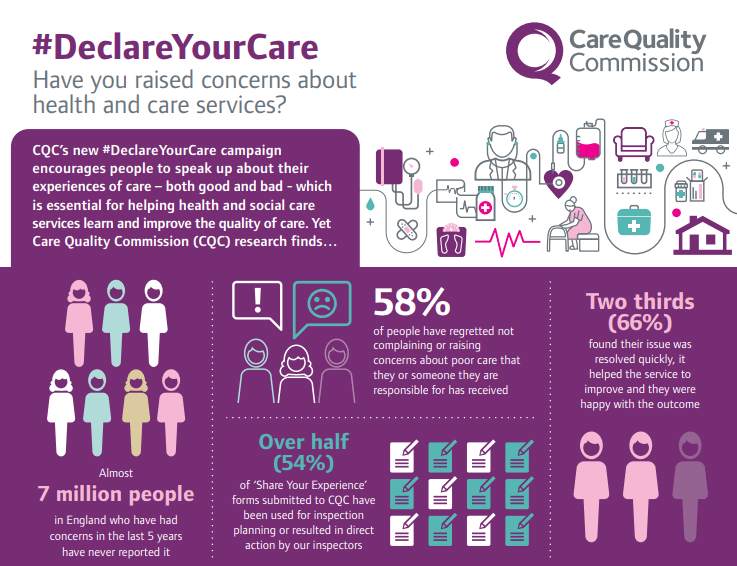
That’s why CURA is supporting #DeclareYourCare, a new campaign by the Care Quality Commission (CQC). The CQC is the independent regulator of all health and social care services in England. Its year-long campaign encourages people to share their experiences of care. Not just poor care, but good care too.

The campaign builds on research by the CQC, which shows people regret not raising concerns about their care, while those who do raise concerns see improvements. According to the CQC, almost seven million people with concerns about their care in the past five years did not make a complaint. The research also found that 58 percent of these people regretted not raising their concerns. Of those who did raise a concern or complaint, 66 percent found the issue was quickly resolved, it helped the service to improve and they were happy with the outcome.

The CQC research also reveals the reasons why people said they didn’t raise their concerns:

  • The feeling that nothing would change as a result (37 percent).
  • Not knowing who to raise their concerns with (33 percent).
  • Not wanting to be seen as a troublemaker (33 percent).
  • Worrying about not being taken seriously (28 percent).
  • Not knowing how to raise their complaint (20 percent).

With one in three people admitting that they did not know how to raise a concern or make a complaint, the CQC is reminding all providers of the importance of making sure that service users and their loved ones are aware that processes are in place to respond to their concerns.

Speak to the care home or agency care manager to give them a chance to investigate, explain and put things right. Tell them what you want them to do. Don’t be worried about raising issues. If you don’t speak up, then improvements can’t be made or problems resolved. A manager may not be aware there is an issue until you raise it. Most problems can be easily resolved at this stage; however, you may wish to agree a time frame for a resolution.

Keep accurate records of your complaint and any communication.

 Put everything in writing so there’s a record of correspondence, keep notes of telephone calls and meetings, and keep a diary of issues relating to your complaint.

Cura’s priority is the high-quality, safe care of residents. 

Our Care Home Management Solutions are focused on ensuring that residents feel reassured, more involved and have confidence in their care home.

When carers use Cura’s electronic care agency software to deliver your care they are ensuring a more personalised and reliable service. The care planning system also monitors the safety of your environment so that you can feel more content.

Cura also gives reassurance to your loved ones. 

Our mobile care monitoring app, Cura Kin, gives authorised family members and friends secure access to information about your daily well-being, meals, participation in activities and much more. Cura Kin also allows family members to keep residents informed of their news with messages and photos.

The most important thing is that you should not feel afraid to speak up. If you don’t raise concerns, nothing can be done about them. Raising awareness of problems could help to make things better, as well as raising awareness for other people being cared for by the same provider.

Fulford Nursing Valentines, Nursing Home System 27Feb, 2019
Cupid visits Fulford Nursing Home on Valentine’s Day

Love is in the care! Cura spreads the message of love by surprising the residents of Fulford Nursing Home on 14th February 2019.

Experience the Difference with Cura's Nursing Home System

“We work with hundreds of providers and suppliers all the time but Cura make a difference, not every company goes above and beyond, and Cura always do.” - Ms Elizabeth Hancock, Managing Director

“Cura's nursing home system has helped us capture special moments and share the moments with their families as well,” - Alison Wimbles, Nurse

“It really is a very good surprise. Uplifting, I’m pleased.” - Muriel, resident

Cura Means Care

Our tagline “Cura means Care” says it all. Our team will hold your hand through every step of your journey and ensure you and your entire team get the most from the use of technology in a care environment. Together we can go further to safeguard your residents and care workers.

For more information on Cura Systems and our groundbreaking products and services, please email us on info@cura.systems or call us today on 020 3621 9111.